


Mind the gap - or don't? Latest research and guidelines on diastasis recti post-partum.

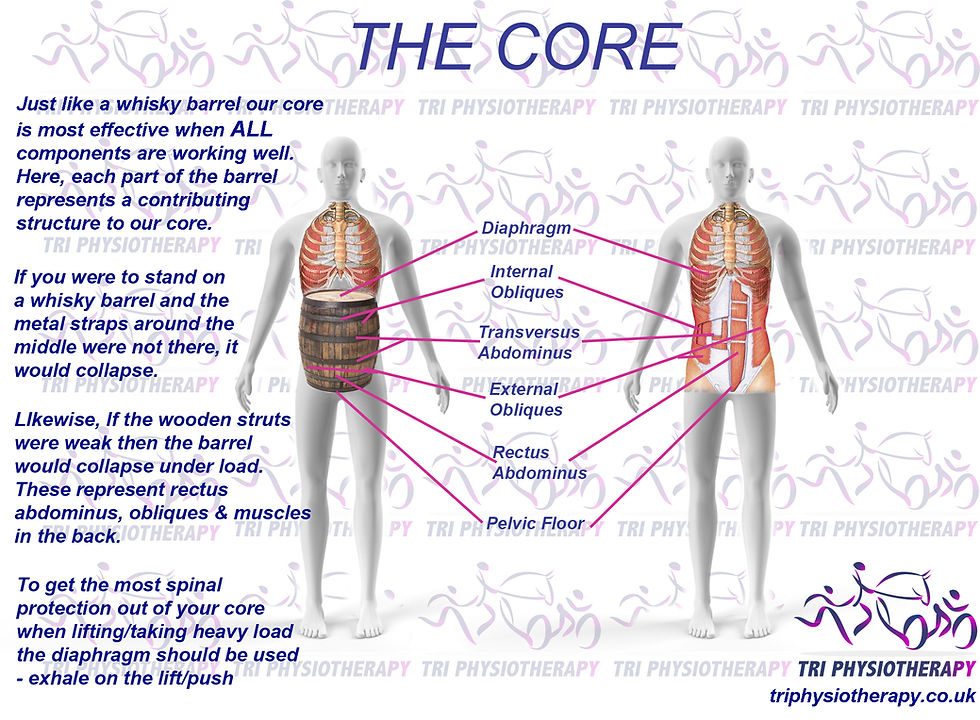
Diastasis recti is the name for the separation which occurs across the superficial abdominal muscles - the rectus abdominus - when you are pregnant. In previous years there has been a heavy focus on the width of separation (‘the gap’) and therefore efforts to prevent or close the gap.
New research is coming out all the time and we now know that this separation is in fact a normal, physiological adaptation of the female pregnant body to enable your baby to grow and your womb to expand with them. Isn't that amazing! We know that all pregnant women will have this separation at the end of their pregnancy due to this adaptive stretching process, and it is not something we can prevent.
What happens after pregnancy?
After having your baby this gap usually closes over time as your muscles strengthen again and the tension across the midline fascia reestablishes. In some cases the muscles stay apart months after birth and this is where physiotherapy can come in.
Rather than just ‘closing the gap’ the aims of physiotherapy are:
· To improve your connection with your core muscles, pelvic floor and ribs
· To improve the strength and function of the abdominal muscles
· To increase tension across the gap and the ability to manage intra-abdominal pressure
· To get your core working with the rest of your body
· To get your core engaged for everyday activities and help you return to sport or exercise
Pelvic floor and core exercises at the right level can help achieve this and in fact loading the core muscles correctly has been shown to be safe and the most effective way to improve core muscle function and patient outcomes.
What about doming?
Doming or coning is a result of increased intra-abdominal pressure which then bulges out through the midline – where you might see a distinct ‘dome’ down your middle. Growing research shows that this is not dangerous or damaging and in fact the core muscles need to be challenged in order to grow stronger and for tension across the 'gap' to improve.
However, whilst doming itself is not harmful, it could be a sign that you are not controlling intra-abdominal pressure well and therefore putting more pressure on other structures such as your pelvic floor.
So how to rehab your core postpartum?
We would initially suggest working on connecting with your deep core muscles, pelvic floor and ribs. There is work to be done in facilitating correct breathing patterns to prevent any excess pressure through the core and onto the pelvic floor.

This is something we can address in clinic and teach during post-partum physio-led exercise classes. This ensures you are working your core muscles at the correct level for you, to get the best support through progressively building strength and confidence in your core.
Theodorsen, N.-M., Donnelly, G., & Bø, K. (2026). Diastasis Rectus Abdominis: Time to Reconsider Our Approach. A Scoping Review. Journal of Women's & Pelvic Health Physical Therapy, 50(4), 257–267. https://doi.org/10.1097/JWH.0000000000000383

Comments